No Products in Your Cart

When it comes to making a charcuterie board that’s both stunning and safe for food, the wood you choose is everything. Your best bets are closed-grain hardwoods like Black Walnut, Hard Maple, and Cherry. These species hit the sweet spot, offering the perfect blend of hardness, durability, and food safety. They’re dense enough to resist knife marks but not so hard they’ll dull your blades in a hurry, making them the top choices for both looks and function.
Picking the right lumber is the most important decision you'll make. It’s a choice that affects not just the board's appearance and how long it lasts, but also its safety for serving food. Three main factors really determine if a wood is up to the task: its hardness, grain structure, and natural properties.
An ideal wood needs to be tough enough to handle slicing and serving without getting covered in deep, bacteria-trapping scratches. This is where the Janka hardness scale comes in handy. You’re looking for a sweet spot (Usually between 900 and 1,500 lbf) that gives you resilience without being brutal on your knife edges.
Just as important is the wood's grain. For any surface that touches food, you should only be looking at closed-grain woods. Their non-porous nature stops moisture, oils, and bacteria from seeping deep into the wood fibres, which makes them much easier to clean and more hygienic over time. Woods with large, open pores, like Red Oak, are a poor choice because they can trap food particles.
Finally, the wood must be non-toxic and free from any natural oils or resins that could leach into food. Following this simple rule ensures your beautiful creation is as safe as it is stylish.
In the heart of Canada's woodworking scene, Black Walnut reigns supreme as the best wood for charcuterie boards, especially for makers sourcing from suppliers like The Knotty Lumber Co. in Hamilton, Ontario. Its Janka hardness rating of 1,010 lbf ensures it withstands knife cuts without deep scarring, reducing bacteria traps.
To help simplify your decision, here’s a quick rundown of our top three recommended woods. Each one offers a unique mix of beauty and performance for your next project.
For those who want a quick comparison, this table breaks down the key features of our top three choices. Black Walnut offers dramatic elegance, Hard Maple provides clean durability, and Cherry brings a timeless warmth that only gets better with age.
| Wood Species | Janka Hardness (lbf) | Key Characteristics | Best For |
|---|---|---|---|
| Black Walnut | 1,010 | Rich, dark chocolate colour with beautiful grain patterns. | Creating high-contrast, elegant boards that double as statement pieces. |
| Hard Maple | 1,450 | Bright, creamy colour with a subtle, clean grain. Very durable. | Everyday use, butcher blocks, and minimalist designs that highlight food. |
| Cherry | 950 | Warm reddish-brown hue that deepens with age. Smooth texture. | Timeless boards that develop a rich, beautiful patina over time. |
Each of these woods is a fantastic option, so the "best" one often comes down to the final look you're trying to achieve. You really can't go wrong with any of them.
Before you even think about which wood species to pick, you need to get the science right. The best wood for a charcuterie board isn't just about looks; it’s a careful balancing act of physical properties that guarantee the board is safe, durable, and built to last. These are the non-negotiables that separate a high-quality, heirloom piece from one that cracks or harbours bacteria.
Four key traits really determine if a wood is cut out for food duty: hardness, grain structure, toxicity, and stability. Each one plays a critical role in how the board performs over time. Understanding these will help you move past generic advice and make a choice that’s right for your specific needs.
The Janka hardness scale is our go-to for measuring a wood's ability to resist dents and dings. This is a big deal for a charcuterie board that will face cheese knives, slicers, and constant handling. If a wood is too soft, it’ll scar up easily, creating deep grooves where bacteria can hide and making it a nightmare to clean.
But going for the hardest wood you can find isn’t the answer, either. Extremely dense woods, like some exotics, can be brutal on your knives, dulling their edges way too fast. The sweet spot for a charcuterie or cutting board usually falls somewhere between 900 and 1,500 lbf on the Janka scale. This range gives you fantastic durability without wrecking your cutlery.
Key Insight: A mid-range Janka hardness rating ensures your board is tough enough for daily use but forgiving on your knives. This balance is exactly why pros and experienced makers keep coming back to species like Walnut, Maple, and Cherry.
This might be the most critical factor for food safety: the wood’s grain structure. Woods are generally split into two camps: closed-grain and open-grain, which just refers to the size of their pores. Open-grain woods like Red Oak have big, visible pores that are notorious for trapping moisture, food bits, and bacteria.
On the flip side, closed-grain hardwoods like Hard Maple have microscopic pores, creating a smooth, almost non-permeable surface. This makes them far more hygienic and a breeze to clean. When you properly season a closed-grain board with a food-safe finish, you create a tough barrier that stops liquids from seeping deep into the wood fibres.
For a deeper dive into how different grain structures affect your project, you can learn more about the various wood types for cutting boards and see why porosity is so important.
Another must-check is whether a wood species is naturally food-safe. Some wood types contain oils, resins, or other compounds that can be toxic if they get into your food. These substances can leach out, especially when they come in contact with acidic or oily ingredients you’d find on a charcuterie platter.
Because of this, you have to stick with woods known to be safe for kitchen use. Classic domestic hardwoods like Maple, Walnut, and Cherry are trusted for a reason. Always do your homework on a wood species, especially if it's an exotic or less common type, to make sure it’s free of any harmful stuff before you let it near food.
Finally, a board’s longevity comes down to the wood’s stability. Wood is a natural material, and it’s always moving—expanding and contracting with changes in humidity and temperature. A stable wood is one that resists this movement, which means less risk of warping, cupping, or cracking down the road.
Using properly dried lumber is the first and most important step. Kiln-dried wood has a controlled moisture content that helps it stay flat and true. Choosing a species known for its stability, paired with a good finishing and maintenance routine, will ensure your charcuterie board stays a beautiful and functional centrepiece for years to come.
Choosing the right wood for a charcuterie board comes down to a careful balance of looks, durability, and food safety. While plenty of hardwoods can do the job, a few stand out from the pack for their beauty and performance. Let's break down the most popular domestic species—Black Walnut, Hard Maple, Cherry, and White Ash—to help you pick the perfect one for your next project.
It’s not just about maxing out one feature. Now, let’s see how our top picks stack up in the real world.
Black Walnut is almost always the first wood people think of for a premium charcuterie board, and for good reason. Its deep, chocolate-brown heartwood, often highlighted with lighter sapwood and swirling grain, creates a stunning backdrop for cheeses, fruits, and cured meats. That rich colour instantly makes any spread feel more luxurious.
Beyond its looks, Walnut has a Janka hardness of 1,010 lbf, which is right in the sweet spot. It’s tough enough to handle cheese knives without scratching easily, but it won’t dull your blades like a rock-hard exotic might. It's a fantastic balance of durability and knife-friendliness, making it a reliable workhorse.
Its closed-grain structure is another huge plus. The fine, non-porous surface is key to preventing moisture and bacteria from getting in, which keeps the board hygienic and easy to clean. For any surface that touches food, this is a non-negotiable.
Key Differentiator: Black Walnut’s greatest strength is its seamless blend of high-end looks and practical, everyday durability. It's the go-to for a board that feels both luxurious and functional.
When you need pure durability and a clean, modern aesthetic, Hard Maple is the undisputed champion. Its creamy white to light golden hue provides a neutral canvas that really makes the colours of your food pop. It’s a minimalist look that fits perfectly in contemporary kitchens and is a favourite for professional food photography.
Hard Maple’s claim to fame is its incredible toughness. The Hard Rock Maple we get from Ontario is prized for its classic butcher-block resilience. With a Janka hardness of 1,450 lbf, it's over 50% more dent-resistant than Cherry, shrugging off wear from knives and slicers. This thing is built to last through heavy use.
The species is also famous for its incredibly fine, closed-grain texture. This is exactly why it’s the standard for professional butcher blocks—its surface is one of the most hygienic and easiest to maintain of any domestic wood. For a board that will see constant action, Maple is a smart investment.
Key Differentiator: Hard Maple delivers unbeatable hardness and a bright, clean look, making it the top choice for high-use settings where function and minimalist style are the priority.
Cherry is loved for its warm, reddish-brown colour and its unique habit of darkening over time. A freshly milled Cherry board starts with a lighter, almost pinkish tone, but exposure to light and air will slowly transform it into a deep, rich patina that you just can't fake with stains. This graceful aging process gives the piece a sense of character and history.
With a Janka hardness of 950 lbf, Cherry is a bit softer than Walnut but still offers plenty of durability for serving. It’s perfectly suited for presenting food and handling light slicing, making it a solid choice for a dedicated charcuterie board. The satiny-smooth texture and subtle grain are a joy to touch and maintain.
Just like our other top picks, Cherry is a closed-grain hardwood. Its fine pores mean it stays food-safe and is simple to clean, resisting oils and flavours from seeping in. It’s a dependable and beautiful option for any kitchen.
Key Differentiator: Cherry's defining trait is its beautiful aging process. It’s the perfect wood for someone who wants to create an heirloom piece that tells a story and deepens in beauty over the years.
White Ash is a fantastic and often overlooked option that brings a totally unique look to the table. Its light, creamy colour is similar to Maple, but it stands out with a much more pronounced and dramatic grain pattern. This bold, sweeping grain can become the central feature of the design, making every board truly one-of-a-kind.
When it comes to durability, White Ash is a solid performer with a Janka rating of 1,320 lbf. This puts it squarely between Walnut and Maple, offering excellent resistance to dents and scratches. It's a tough wood that can easily handle the demands of a busy kitchen or frequent entertaining.
While it's traditionally known for making tough tool handles and baseball bats, its closed-grain properties also make it great for food surfaces. Just make sure you're using White Ash and not a more porous species like Black Ash. When properly selected and finished, White Ash is both a safe and striking choice.
Key Differentiator: The prominent, sweeping grain of White Ash provides a bold, organic aesthetic that sets it apart from the subtler patterns of Maple or Cherry. It's perfect for making a statement piece.
If you want to explore an even wider range of domestic and exotic woods, our comprehensive wood species guide offers an in-depth look at many other excellent choices we stock at The Knotty Lumber Co.
To help you compare these options at a glance, here’s a matrix that sums up their key performance stats. It covers everything from hardness and grain to maintenance and cost, giving you the data needed to pick the best wood for your charcuterie board project.
| Wood Species | Janka Hardness (lbf) | Grain Porosity | Colour & Appearance | Maintenance Level | Typical Cost |
|---|---|---|---|---|---|
| Black Walnut | 1,010 | Closed & Fine | Rich dark brown with complex grain | Low | $$$$ |
| Hard Maple | 1,450 | Closed & Very Fine | Creamy white to light yellow, subtle grain | Low | $$$ |
| Cherry | 950 | Closed & Fine | Pinkish-brown, darkens to deep red | Low | $$ |
| White Ash | 1,320 | Open, but antibacterial | Creamy white with bold, straight grain | Low | $ |
This comparison makes one thing clear: there’s no single "best" wood, only the "best fit" for what you need and what you like. Whether you’re drawn to the elegant darkness of Walnut, the rugged brightness of Maple, the warm patina of Cherry, or the bold grain of Ash, each of these species provides a fantastic foundation for a beautiful and food-safe charcuterie board. Your final choice really depends on the story you want your piece to tell.
While classic hardwoods like Walnut and Maple are celebrated for their reliability, exotic woods are your ticket to creating truly unforgettable pieces. For makers aiming to craft a charcuterie board with serious visual impact, species like Wenge, Padauk, and Purpleheart offer colours and grain patterns that domestic woods just can't match. These are the woods you reach for when making high-end gifts, decorative centrepieces, or boards where the material itself is the star of the show.
Working with exotics, however, requires a bit of a different mindset. These woods are often dramatically harder and denser than their North American cousins, which brings both challenges and rewards. Their incredible colours are all-natural, but keeping that vibrancy means using specific finishing techniques, as many are sensitive to UV light. This makes them a fantastic choice for an experienced maker ready to push their creative limits.
Wenge is a standout choice for anyone going for a modern, high-contrast look. Hailing from Central Africa, its heartwood is a deep, dark brown—almost black—streaked with fine black lines. This striking pattern creates a powerful visual that pairs beautifully with lighter domestic woods like Maple or Ash when used as an accent.
With a Janka hardness of 1,930 lbf, Wenge is incredibly dense and durable, making it tough against scratches. But that same hardness makes it more of a challenge to work with. It can be brittle and prone to splintering, so sharp tools and a careful hand are non-negotiable. Its pores are also larger than Maple's, so a thorough finish with a food-safe wax is crucial to properly seal the surface. Click here to learn more about Wenge lumber
Key Insight: Wenge shines brightest as accent strips or in decorative boards where its dramatic, near-black appearance can create a luxurious, high-end feel. Its hardness makes it very durable but demands patience and sharp tools during the build.
If you want a board that commands attention, African Padauk is hard to beat. It’s famous for its brilliant, fiery reddish-orange colour that feels warm and energetic. The colour is incredibly vivid right after being cut, making it a spectacular choice for a statement piece that immediately draws the eye.
Padauk is quite hard, with a Janka rating around 1,970 lbf, which translates to excellent durability. It machines pretty well, but the vibrant red dust it kicks up can be a nuisance, potentially staining lighter woods it’s glued up with. You'll want to plan your assembly carefully to prevent colour bleed. Over time and with UV exposure, its fiery red will slowly mellow into a rich, dark reddish-brown.
To keep its initial brilliance for as long as possible, a UV-inhibiting finish is essential. This makes Padauk a fantastic candidate for a serving board meant for special occasions rather than one destined for heavy, everyday use. Click here to learn more about padauk lumber
Purpleheart is probably the most famous colour-changing wood, and watching its transformation is pure magic. When freshly cut, it has a dull, greyish-brown colour, but exposure to oxygen and UV light turns it into a spectacular, deep eggplant purple. No other wood offers this kind of natural, regal hue.
This Central and South American wood is exceptionally hard and dense, with a Janka hardness rating that can reach up to 2,520 lbf. This makes it one of the most durable options out there, but also one of the toughest on your tools—carbide-tipped blades are almost a must. It can also secrete a sticky resin when it heats up during cutting, which means you’ll need to use slower feed rates and clean your blades often.
Key Insight: Much like Padauk, Purpleheart's famous colour won't stay that vibrant forever. Too much UV exposure will eventually cause it to darken to a deep brown. Using a UV-protective finish and keeping the board out of direct sunlight are the keys to maintaining its signature purple for as long as possible.
These exotic woods open up a whole new world of design possibilities, letting you create a truly functional piece of art. To see how these and other unique species can be used, explore our full Knotty Lumber Co. exotic wood selection and find the perfect material for your next standout project. Click here to learn more about purpleheart lumber
Knowing the best wood for a charcuterie board is only half the battle. Just as important is knowing which species to keep out of the kitchen entirely. Picking the wrong wood can create serious food safety issues, lead to a board that warps or cracks in weeks, and even introduce toxic compounds to your food.
To keep your projects beautiful and safe, we’ve sorted the woods to avoid into three simple categories. This will help you steer clear of common mistakes, focusing on why porosity, softness, and natural toxicity make certain woods a definite no-go for any surface that touches food.
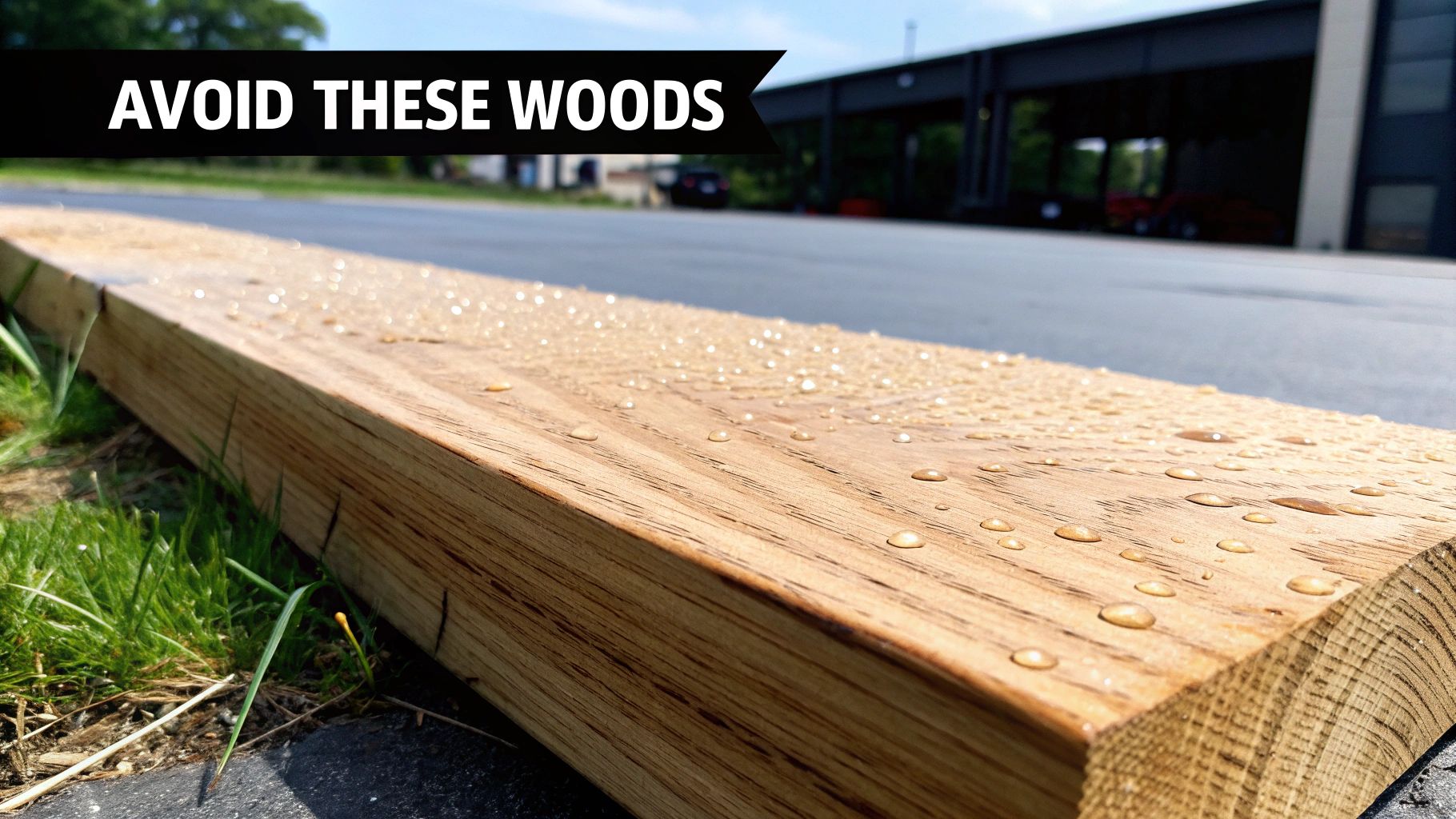
Softwoods such as Pine, Cedar, Spruce, and Fir should never find their way into a cutting board or charcuterie project. Their low density and softness mean they damage far too easily. Even a simple cheese knife will leave deep cuts and gouges across the surface.
Those scars aren’t just a cosmetic problem; they become permanent traps for bacteria. Worse yet, softwoods are prone to splintering. The last thing anyone wants is for tiny wood slivers to break off and end up in their food.
On top of that, many softwoods—especially Cedar and certain Pines—are loaded with strong aromatic resins. These natural oils can impart a powerful, unpleasant flavour to your food, completely overpowering the delicate taste of the cheeses and cured meats you’re serving.
Finally, and most importantly, some woods are naturally toxic. These species contain compounds, allergens, or irritants that can leach into ingredients, posing a significant health risk. This is especially true with certain exotic woods that look incredible but hide dangerous properties. Always do your research before using an unfamiliar species for any culinary project.
Here are a few common woods known to be toxic or cause severe irritation and should always be avoided:
By steering clear of these three categories—porous, soft, and toxic woods—you can ensure the board you create is not only stunning and durable but also completely safe for you, your family, and your guests to enjoy for years to come.
Even after you've picked the perfect wood for your charcuterie board, a few practical questions always pop up during the build. We get these all the time from makers, so we've put together some straight answers to help you nail the final details of your project.
Think of this as your go-to guide for everything from choosing the right finish to figuring out the ideal thickness. Let’s make sure your board ends up being as functional as it is beautiful.
The best approach is a simple two-step process: start with 100% pure mineral oil, then top it off with beeswax or a good board butter. Mineral oil is completely non-toxic and soaks deep into the wood fibres, hydrating them from the inside out to stop the board from drying out and cracking. It's the must-do first step for seasoning any new board.
Once you’ve applied a few coats and the wood won’t absorb any more oil, you seal it all in with a wax-based conditioner. This wax creates a tough, water-resistant barrier on the surface that beads up moisture and makes cleanup a breeze. Best of all, this all-natural combo is easy to reapply whenever the board starts looking a little thirsty.
Absolutely, but there are a couple of things to keep in mind. Purpleheart is a beast when it comes to durability—its Janka hardness is around 2,520 lbf, so it’s incredibly resistant to scratches. Its dense, closed-grain structure also means it’s perfectly food-safe once you get a good finish on it.
The real challenge is its famous colour. That stunning violet hue can fade to a dull brown if it gets too much sun. After a while, it may need to be refinished. Also, because it's so hard, it can be a bit tough on your knife edges. That’s why a lot of makers use Purpleheart for decorative accents next to something more knife-friendly like Maple.
A popular technique is to pair a bold exotic like Purpleheart with a more neutral domestic wood. This creates a stunning visual pop while keeping the main serving area practical for everyday use.
The right thickness really depends on the board's size and what it'll be used for. For most standard serving boards meant for cheese and meats, a final thickness between 3/4 inch and 1 inch is perfect. This gives it a solid, high-quality feel without making it too heavy or awkward to carry.
If you're crafting a big live-edge slab or a board that needs to pull double-duty as a heavy-use cutting surface, aim for something chunkier, between 1.5 to 2 inches. That extra mass adds stability, reduces the risk of warping over time, and gives the board a commanding presence on the countertop.
For a charcuterie board that's mostly for serving, face grain is the way to go. This construction showcases the wood’s long, flowing grain patterns beautifully, really highlighting the natural character of species like Walnut or Cherry. Plus, it’s a whole lot simpler and faster to build.
End grain, where the wood fibres point up, is the gold standard for dedicated, heavy-duty cutting boards because it's "self-healing." However, it's far more work to create, needs more frequent oiling to stay hydrated. For a serving board, face grain delivers the best mix of beauty, stability, and straightforward construction.
Ready to start your next project with the perfect hardwood? At The Knotty Lumber Co., we stock a premium selection of Walnut, Maple, Cherry, and exotic woods ideal for creating stunning charcuterie boards. Explore our collection at https://www.theknottylumberco.ca and find the perfect lumber for your design.


